
Elk River City Directory Holdings
The strongest verified historical directory resource is the Minnesota Historical Society telephone-directory finding aid. It describes telephone books, rather than a complete modern resident database, and the volumes combine alphabetical residential and business listings with phone numbers and street addresses. Yellow pages are subject-arranged business listings. The finding aid reports about 265 volumes and 42 microfiche sets across its wider collection, and it provides city, year, and shelf detail for research. The following collections keep the documented access limits visible.
| Collection | Years | Where held | Access |
|---|---|---|---|
| Elk River telephone directories | 1957; 1959-1968 annual; 1969-1983; 1983-1987 regular and/or yellow; 1988 yellow-only; 1989-1992; 1994-2000; 2001-2005 with yellow supplements in several years; 2011-2012 yellow-only | MNHS Gale Family Library finding aid | Open research; confirm the shelf and volume |
| Elk River Weekly News and Star News | 1872-1875; 1875-1882; August 1882 onward as Sherburne County Star News; Star News from April 2003 | MNHS Digital Newspaper Hub and Gale Family Library | Search and digital access vary with rights |
| St. Cloud Times index | 1928-01-03 to 2008-12-31 | Great River Regional Library | Date and name index; request copies through library staff |
| Sherburne death index | 1870-1981 | MNHS finding aid and microfilm | Open research in three partial volumes |
| Assessment rolls and tax lists | 1859-1901 irregular, with later sample decades | MNHS county finding aid | Archive research and copy conditions vary |
A printed directory entry is one dated observation. The exact year, whether the volume is regular or yellow-only, and the collection location are part of the citation.
Elk River City Directory Years
The Elk River run begins with 1957, followed by annual volumes from 1959 through 1968, then volumes for 1969 through 1983. The finding aid identifies regular and or yellow-page volumes in 1983 through 1987, yellow-only 1988, volumes for 1989 through 1992, and 1994 through 2000. It then lists 2001 through 2005 with yellow supplements in several years, followed by yellow-only volumes for 2011 and 2012. Gaps are real. A listing that says a directory is available does not mean that it includes ordinary residential pages.
The official finding aid does not name a publisher, establish a full publisher history, or verify a distinct address-arranged run for Elk River. Ask the MNHS telephone-directory collection for the exact volume first. A street-order volume should be treated as available only after a librarian or shelf record confirms it.
Note: Yellow-only volumes can preserve a business category or telephone listing without preserving an ordinary alphabetical household entry.
Elk River Newspaper Line
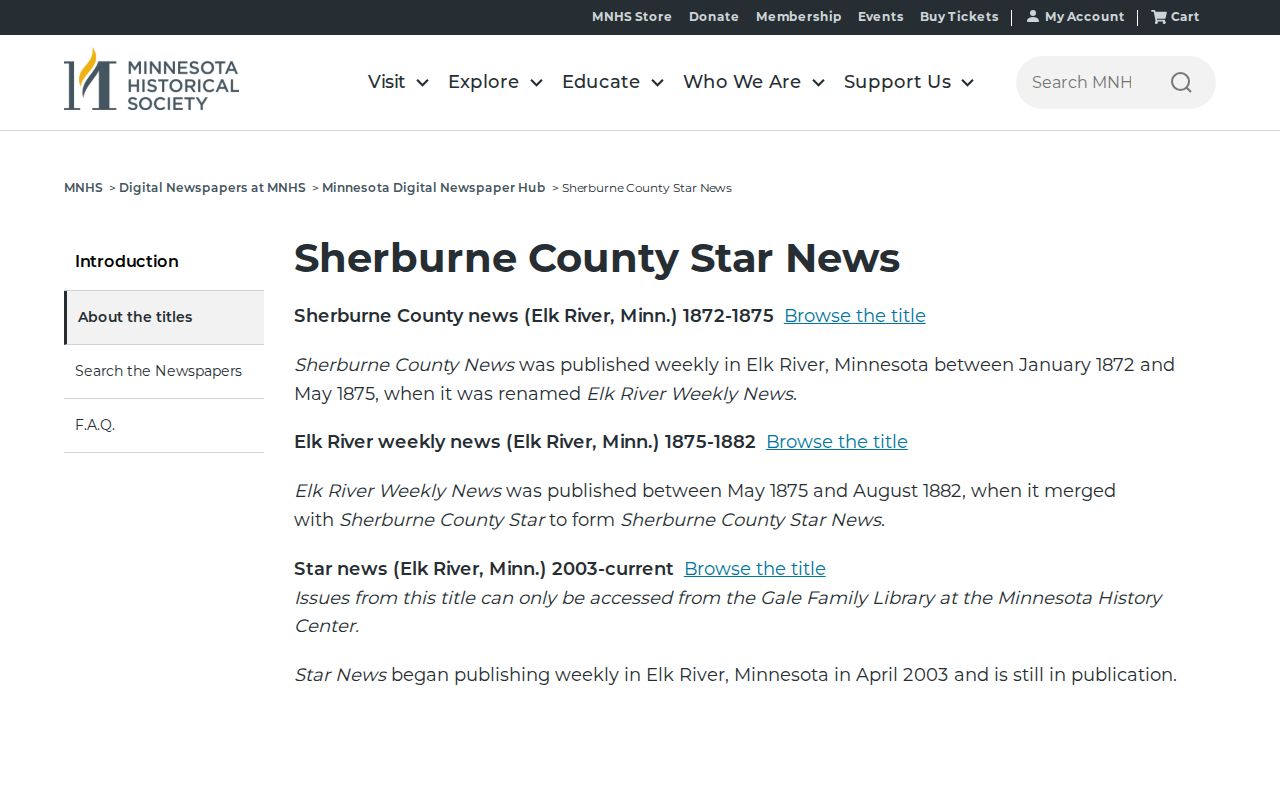
Newspapers give the directory record a longer timeline. MNHS traces the local line from Sherburne County News, published in Elk River from 1872 to 1875, to Elk River Weekly News after the May 1875 rename. The Weekly News ran through 1882, when it merged with Sherburne County Star in August to form Sherburne County Star News. Star News continues as a current title from April 2003. The Digital Newspaper Hub holds digitized historical pages and much of the pre-1977 material, while current-title issues are at the Gale Family Library.
The MNHS Star News collection provides the verified title chronology for this historical companion.
A newspaper notice can suggest a move, death, civic event, or business connection, but it should be checked against a directory year, death index, cemetery record, probate file, or land record.
Note: Historic newspaper results are leads to corroborate, not proof that a printed name belongs to the person sought.
Read an Elk River City Directory Entry
The accessible collection description supports only a careful entry inventory. A telephone directory can supply an alphabetical name, phone number, and street address, with a separate business yellow-pages portion. An individual Elk River page image and its exact abbreviation key were not captured during research. The entry should therefore be transcribed as printed and described only with fields visible in the specific volume. Do not add a household relationship, occupation, ownership mark, or other notation unless that exact book shows it.
| Printed name | Transcribe the alphabetical name exactly, including initials, spelling, and any visible punctuation. |
|---|---|
| Telephone number | Record the number only if the volume prints one; a telephone-directory listing is not an identity proof. |
| Street address | Preserve the address as printed, then compare it with historic maps or a legal description when the modern address differs. |
| Business listing | Keep a yellow-page item separate from an ordinary alphabetical listing because the two sections serve different purposes. |
| Unverified markings | Do not interpret abbreviations or family notation until the specific volume’s introduction or key is available. |
- Criss-cross directory
- An address-arranged directory, if a repository confirms one exists. No complete Elk River run was verified.
- Householder index
- An index that may group a household or address, but its local availability and fields must be checked volume by volume.
- Abbreviation key
- The explanatory key printed in a directory volume, which must be read before interpreting shorthand.
Keep the image or citation with the transcription. That preserves the printed context when later records use a different initial, spelling, address form, or surname.
Elk River City Directory Library Shelf
Elk River Public Library is part of Great River Regional Library at 13020 Orono Parkway, with public computers, librarian help, genealogy databases, and interlibrary loan. The branch is open Monday through Thursday from 10 a.m. to 7 p.m., Friday 10 a.m. to 5 p.m., Saturday 10 a.m. to 3 p.m., and closed Sunday. GRRL directs local researchers to Ancestry Library Edition for in-library use, FamilySearch, MNHS People Records, Minnesota Digital Newspaper Hub, MNLINK, obituary resources, Find a Grave, and the St. Cloud Times index.
The Elk River library is the local starting point for a directory volume that is not openly digitized.

GRRL’s genealogy resources can connect a directory name to an index or a library request without turning one printed line into proof of a full household.
Elk River City Directory Timeline
Elk River’s record trail predates the telephone-directory shelf. County finding aids place assessment rolls in 1859-60, incomplete tax lists in 1860-1901, and District Court birth and death returns in 1870-1909. The city was platted in 1865 and incorporated in 1880. These dates help explain why research for an early Elk River family may need a newspaper, tax list, cemetery, or county record rather than a directory volume.
- 1859-1860: Sherburne assessment rolls begin in the historical finding aids.
- 1872: Sherburne County News begins the documented local newspaper line.
- 1875: Elk River Weekly News follows the rename in May.
- 1882: The Weekly News and Sherburne County Star merge into Sherburne County Star News.
- 1957: The MNHS finding aid identifies the first Elk River telephone-directory volume.
- 2011-2012: The documented run has yellow-only volumes, not a verified full residential directory.
The research did not identify a courthouse disaster, a recorder imaging-cutover date, or a complete digitization date. Collection dates, image dates, index dates, and online-access dates should not be treated as the same thing.
Trace Elk River Families in Directories
Use the available Elk River telephone books as a household timeline with checkpoints. Begin with the earliest directory year that may contain the name or address. Record every printed name, number, and address exactly. Then compare the prior and next available volumes, taking the documented gaps seriously. Federal census schedules provide a second household snapshot, and 1950 is the latest broadly available full decennial census as of the research date. The absence of a name can reflect an unlisted phone, a missed year, a different municipality, or a changed route rather than an absence from Elk River.
- Locate the earliest available directory volume and copy the printed entry with its year and volume information.
- Move forward and backward through the available years, noting changes in the printed name, telephone number, or street address.
- Pair a directory-era finding with the 1940 or 1950 census where appropriate, and keep the census date separate from the directory date.
- Check the St. Cloud Times index, an obituary, or the Sherburne death index for a departure, death, or family lead.
- Use an assessor or deed record only to test an address or title connection, not to recast a printed directory clue as current occupancy.
A historic address that seems to fail may require an Orono, Lower Town, township, old plat, or cemetery name search. The railroad and highway shift changed the practical center of Elk River, and old place names remain useful search terms.
Elk River City Directory Archive Fallback
When the telephone-directory shelf does not answer the question, the Sherburne History Center is the local appointment route. A research reservation requests first and last name, email, phone, desired date and time, and a research description. Its cemetery inventory gives dates and organizations for Meadowvale, Orono, Vernon, and St. Andrew’s. No interactive online interment search was exposed, so a scheduled visit or direct inquiry is the honest next step for a cemetery or local-history question.
The Sherburne History Center preserves a research route beyond the documented volumes.
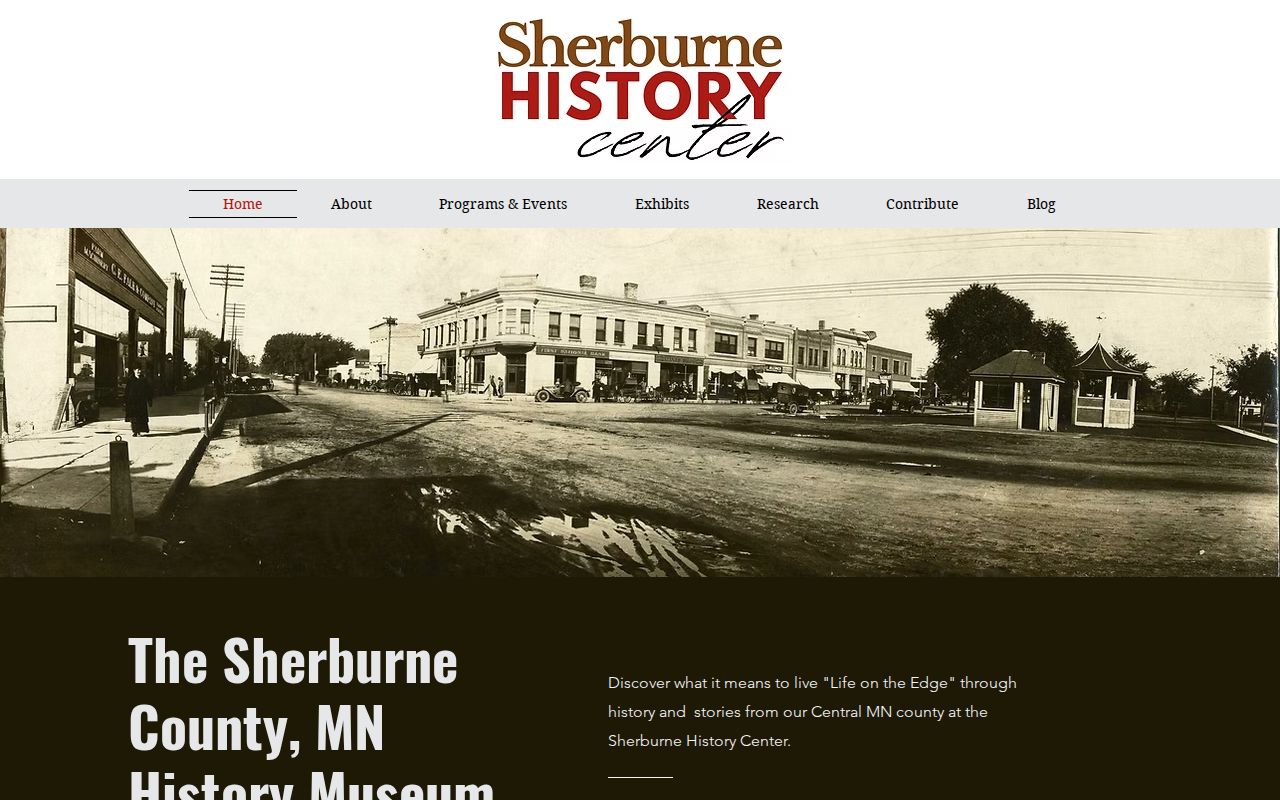
Its holdings can be paired with MNHS finding aids for assessment rolls, tax lists, court indexes, naturalizations, village and township minutes, and road records.
Elk River Historical Endpoints
The Sherburne death index offers a defined endpoint for many historical directory trails. It covers 1870-1981 in three partial microfilm volumes: 1870-1932, 1933-1971, and 1972 through August 1980. Each entry gives a name, date, volume, page, and line, with originals associated with the Recorder. A marriage index compiled in 1984-85 and county court indexes can add other leads. These are indexes, so an entry should direct the next request rather than settle a family relationship by itself.
Newspaper spellings, initials, maiden names, and cemetery dates can differ. Compare at least two independently dated sources before connecting a printed directory entry to a particular person. For a current address-keyed record chain, use the separate Elk River street directory route instead of stretching a historical telephone book beyond its date.
Note: A missing entry in one directory or index is not proof that a person, event, or record did not exist.